Veterans’ Compensation Cost-of-Living Adjustment Act of 2020 (HR 6168) – Introduced by Rep. Elaine Luria (D-VA) on March 10, this bill increases Vet compensation benefits by 1.3 percent (the same as for Social Security recipients). The increase impacts veteran disability compensation, compensation for dependents, the clothing allowance for certain disabled veterans, and dependency and indemnity compensation for surviving spouses and children. This bill passed in the House in May and the Senate in September, and was signed into law by the president on Oct. 20.
Veterans’ Care Quality Transparency Act (HR 2372) – Designed to improve mental health care for veterans and reduce suicide rates, this bill was introduced by Rep. Lauren Underwood (D-IL) on April 25, 2019. It requires the Government Accountability Office (GAO) to report on all arrangements between the Department of Veterans Affairs (VA) and non-VA organizations related to suicide prevention and mental health services. The bill passed in the House in May, the Senate in September, and was enacted on Oct. 20.
Improving Safety and Security for Veterans Act of 2019 (S 3147) – This Act was introduced by Sen. Joe Manchin (D-WV) on Dec. 19, 2019. The bill passed in the Senate in December 2019, the House in November, and is waiting to be signed by the president. Following the investigation of events that ended in tragic veteran deaths in 2017 and 2018, this legislation aims to increase VA health center accountability. Specifically, it requires the Department of Veterans Affairs to submit reports to Congress detailing VA policies and procedures relating to patient safety and quality of care. The first report is due within 30 days after the bill is written into law.
Whole Veteran Act (HR 2359) – This bill was introduced by Rep. Connor Lamb (D-PA) on April 25, 2019. The purpose of this legislation is to expand VA Health efforts to deploy a holistic model of care that focuses on patient engagement and total health. It includes integrating non-drug approaches, such as hypnosis and acupuncture, with standard medical treatment. The bill passed in the House in May, the Senate in October, and was signed into law by the president on Oct. 30.
Vet Center Eligibility Expansion Act (HR 1812) – This legislation extends readjustment counseling and related mental health services to non-combat veterans. These benefits are now available to National Guard and Reserve troops whose service includes fighting national disasters and other emergency and crisis situations. Introduced by Rep. Phil Roe (R-TN) on March 18, 2019, this bill passed in the House in May, the Senate in September, and was signed by the president on Oct. 20.
A bill to nullify the Supplemental Treaty Between the United States of America and the Confederated Tribes and Bands of Indians of Middle Oregon, concluded on Nov. 15, 1865 (S 832) – This bill nullifies the supplemental treaty between the United States and this particular tribe in Middle Oregon, which was signed in 1865. The treaty restricted the tribe members from leaving the reservation, among other conditions. The Department of the Interior has stated that the treaty was never enforced by the federal government or Oregon. The legislation was introduced by Sen. Jeff Merkley (D-OR) on March 19, 2019, passed in both Houses, and signed into law on Oct. 20.
Native American Business Incubators Program Act (S 294) – This bill establishes a grant program to provide business incubation and other business services to Native American entrepreneurs and businesses. It was introduced by Sen. Tom Udall (D-NM) on Jan. 31, 2019, passed in both Houses, and signed by the president on Oct. 20.
A Flush of Protections for Veterans and Native Americans
December 1, 2020 · Blog, Congress at Work
⏱ 3 min read
Veterans’ Compensation Cost-of-Living Adjustment Act of 2020 (HR 6168) – Introduced by Rep. Elaine Luria (D-VA) on March 10, this bill increases Vet compensation benefits by 1.3 percent (the same as for Social Security recipients). The increase impacts veteran disability compensation, compensation for dependents, the clothing allowance for certain disabled veterans, and dependency and indemnity compensation for surviving spouses and children. This bill passed in the House in May and the Senate in September, and was signed into law by the president on Oct. 20.
Veterans’ Care Quality Transparency Act (HR 2372) – Designed to improve mental health care for veterans and reduce suicide rates, this bill was introduced by Rep. Lauren Underwood (D-IL) on April 25, 2019. It requires the Government Accountability Office (GAO) to report on all arrangements between the Department of Veterans Affairs (VA) and non-VA organizations related to suicide prevention and mental health services. The bill passed in the House in May, the Senate in September, and was enacted on Oct. 20.
Improving Safety and Security for Veterans Act of 2019 (S 3147) – This Act was introduced by Sen. Joe Manchin (D-WV) on Dec. 19, 2019. The bill passed in the Senate in December 2019, the House in November, and is waiting to be signed by the president. Following the investigation of events that ended in tragic veteran deaths in 2017 and 2018, this legislation aims to increase VA health center accountability. Specifically, it requires the Department of Veterans Affairs to submit reports to Congress detailing VA policies and procedures relating to patient safety and quality of care. The first report is due within 30 days after the bill is written into law.
Whole Veteran Act (HR 2359) – This bill was introduced by Rep. Connor Lamb (D-PA) on April 25, 2019. The purpose of this legislation is to expand VA Health efforts to deploy a holistic model of care that focuses on patient engagement and total health. It includes integrating non-drug approaches, such as hypnosis and acupuncture, with standard medical treatment. The bill passed in the House in May, the Senate in October, and was signed into law by the president on Oct. 30.
Vet Center Eligibility Expansion Act (HR 1812) – This legislation extends readjustment counseling and related mental health services to non-combat veterans. These benefits are now available to National Guard and Reserve troops whose service includes fighting national disasters and other emergency and crisis situations. Introduced by Rep. Phil Roe (R-TN) on March 18, 2019, this bill passed in the House in May, the Senate in September, and was signed by the president on Oct. 20.
A bill to nullify the Supplemental Treaty Between the United States of America and the Confederated Tribes and Bands of Indians of Middle Oregon, concluded on Nov. 15, 1865 (S 832) – This bill nullifies the supplemental treaty between the United States and this particular tribe in Middle Oregon, which was signed in 1865. The treaty restricted the tribe members from leaving the reservation, among other conditions. The Department of the Interior has stated that the treaty was never enforced by the federal government or Oregon. The legislation was introduced by Sen. Jeff Merkley (D-OR) on March 19, 2019, passed in both Houses, and signed into law on Oct. 20.
Native American Business Incubators Program Act (S 294) – This bill establishes a grant program to provide business incubation and other business services to Native American entrepreneurs and businesses. It was introduced by Sen. Tom Udall (D-NM) on Jan. 31, 2019, passed in both Houses, and signed by the president on Oct. 20.
Disclaimer
These articles provide general information on tax, accounting, and financial topics for small businesses and individuals. They are educational in nature and are not specific legal, accounting, financial, tax, or other professional advice, and should not be relied upon as such. This content was prepared by Service2Client and may have been reviewed or edited by the website owner for accuracy and compliance. Look for a trust mark below for verification details. No representation is made that any approach described will achieve a particular result, and no regulatory or professional body has reviewed or endorsed this content. Because each situation is different, readers should consult a qualified professional about their specific circumstances before acting. Images accompanying these articles are protected by copyright and may not be copied or reused.
National Suicide Hotline Designation Act of 2020 (S 2661) – Introduced by Sen. Cory Gardner (R-CO) on Oct. 22, 2019, this bill requires the Federal Communications Commission to designate 988 as the universal telephone number for national suicide prevention and mental health crisis hotline. It also directs the Department of Health and Human Services to provide access to competent, specialized services for high-risk populations such as LGBTQ youth; minorities; and people who live in rural areas. The Act was passed in the Senate in May, the House in September, and was signed into law on Oct. 17.
Savanna’s Act (S 227) – Named in memory of Savanna LaFontaine-Greywind, a young woman brutally murdered in Fargo in 2017. This legislation addresses violence against the most vulnerable members of the Native American community via better response protocols for missing and murdered cases, and improved access to data and reporting statistics on missing and murdered native women. The Act was introduced by Sen. Lisa Murkowski (R-AK) on Jan. 25, 2019. The bill passed in the Senate in March, the House in September, and was signed into law by the President on Oct. 10.
Not Invisible Act of 2019 (S 982) – This bill accompanies Savanna’s Act by authorizing coordination of efforts between the Department of the Interior and the Bureau of Indian Affairs to reduce violent crime on Indian lands and against Indians. Specifically, the bill requires the joint commission to collaborate on prevention efforts, grants, and programs related to missing Indians, and the murder and human trafficking of Indians. The bill was introduced by Catherine Cortez Masto (D-NV) on April 2, 2019. It passed in the Senate in March, the House in September, and was signed into law by the President on Oct. 10.
Commander John Scott Hannon Veterans Mental Health Care Improvement Act of 2019 (S 1785) – This bill was introduced by Sen. Jon Tester (D-MT) on March 13, 2019. It is designed to improve transition assistance, mental health care, care for women veterans, and telehealthcare provided by the Department of Veterans Affairs. Among other provisions, this legislation requires the VA to submit a plan for mental health care for veterans during the first year after discharge or release from active military, naval or air service. It also mandates that the Department of Defense (DOD) and VA jointly review and report on the records of each former member of the Armed Forces who committed suicide within one year of separation in the prior five years before this bill was passed. The bill passed in the Senate in August, the House in September and was enacted on Oct. 17.
America’s Conservation Enhancement Act (S 3051) – Introduced by Sen. John Barrasso (R-WY) on Dec. 12, 2019, this legislation aims to restore wetlands and wildlife populations. Specifically, the bill reauthorizes funding for the North American Wetlands Conservation Act (NAWCA) at $60 million a year until 2025. The NAWCA includes a voluntary matching grant provision that receives a $3 match from program partners, such as Ducks Unlimited, for every dollar spent by the federal government. Since first enacted in 1989, The NAWCA has conserved more than 30 million acres and created an average of 7,500 new jobs a year. This bill has passed in the House and the Senate and is awaiting the President’s signature.
Dial 9-8-8 for a Mental Health Crisis; Enforcement Against Violence in the Native American Community; and Enhanced Protections for Veterans and Wildlife
November 1, 2020 · Blog, Congress at Work
⏱ 3 min read
National Suicide Hotline Designation Act of 2020 (S 2661) – Introduced by Sen. Cory Gardner (R-CO) on Oct. 22, 2019, this bill requires the Federal Communications Commission to designate 988 as the universal telephone number for national suicide prevention and mental health crisis hotline. It also directs the Department of Health and Human Services to provide access to competent, specialized services for high-risk populations such as LGBTQ youth; minorities; and people who live in rural areas. The Act was passed in the Senate in May, the House in September, and was signed into law on Oct. 17.
Savanna’s Act (S 227) – Named in memory of Savanna LaFontaine-Greywind, a young woman brutally murdered in Fargo in 2017. This legislation addresses violence against the most vulnerable members of the Native American community via better response protocols for missing and murdered cases, and improved access to data and reporting statistics on missing and murdered native women. The Act was introduced by Sen. Lisa Murkowski (R-AK) on Jan. 25, 2019. The bill passed in the Senate in March, the House in September, and was signed into law by the President on Oct. 10.
Not Invisible Act of 2019 (S 982) – This bill accompanies Savanna’s Act by authorizing coordination of efforts between the Department of the Interior and the Bureau of Indian Affairs to reduce violent crime on Indian lands and against Indians. Specifically, the bill requires the joint commission to collaborate on prevention efforts, grants, and programs related to missing Indians, and the murder and human trafficking of Indians. The bill was introduced by Catherine Cortez Masto (D-NV) on April 2, 2019. It passed in the Senate in March, the House in September, and was signed into law by the President on Oct. 10.
Commander John Scott Hannon Veterans Mental Health Care Improvement Act of 2019 (S 1785) – This bill was introduced by Sen. Jon Tester (D-MT) on March 13, 2019. It is designed to improve transition assistance, mental health care, care for women veterans, and telehealthcare provided by the Department of Veterans Affairs. Among other provisions, this legislation requires the VA to submit a plan for mental health care for veterans during the first year after discharge or release from active military, naval or air service. It also mandates that the Department of Defense (DOD) and VA jointly review and report on the records of each former member of the Armed Forces who committed suicide within one year of separation in the prior five years before this bill was passed. The bill passed in the Senate in August, the House in September and was enacted on Oct. 17.
America’s Conservation Enhancement Act (S 3051) – Introduced by Sen. John Barrasso (R-WY) on Dec. 12, 2019, this legislation aims to restore wetlands and wildlife populations. Specifically, the bill reauthorizes funding for the North American Wetlands Conservation Act (NAWCA) at $60 million a year until 2025. The NAWCA includes a voluntary matching grant provision that receives a $3 match from program partners, such as Ducks Unlimited, for every dollar spent by the federal government. Since first enacted in 1989, The NAWCA has conserved more than 30 million acres and created an average of 7,500 new jobs a year. This bill has passed in the House and the Senate and is awaiting the President’s signature.
Disclaimer
These articles provide general information on tax, accounting, and financial topics for small businesses and individuals. They are educational in nature and are not specific legal, accounting, financial, tax, or other professional advice, and should not be relied upon as such. This content was prepared by Service2Client and may have been reviewed or edited by the website owner for accuracy and compliance. Look for a trust mark below for verification details. No representation is made that any approach described will achieve a particular result, and no regulatory or professional body has reviewed or endorsed this content. Because each situation is different, readers should consult a qualified professional about their specific circumstances before acting. Images accompanying these articles are protected by copyright and may not be copied or reused.
PROSWIFT Act (S 881) – This Act was sponsored by Sen. Gary Peters (D-MI) on March 26, 2019. The legislation is designed to improve understanding and forecasting of weather events in space. The bill details provisions designed to improve the ability of the United States to both forecast and mitigate the effects of space weather. The bill designates the National Science and Technology Council’s Space Weather Operations, Research, and Mitigation Working Group as the authority to direct other agency initiatives. The bill establishes a pilot program to enable the National Oceanic and Atmospheric Administration (NOAA) to enter into contracts with the commercial sector to provide space weather data, in adherence to certain standards. The bill passed in the Senate in July and in the House in September, and is currently waiting to be enacted by the President.
CHARGE Act (S 2193) – This bill requires the General Services Administration to issue a charge card to federal agencies in order to pay for charging up federal electric motor vehicles at commercial charging stations. The bill was introduced by Sen. Gary Peters (D-MI) on July 19, 2019. It was passed in the Senate in November 2019 and in the House on Sept. 14, 2020. It is currently awaiting signature by the President.
PIPES Act of 2020 (S 2299) – This bill would amend title 49 of the United States Code to enhance the safety and reliability of pipeline transportation. It was introduced by Sen. Deb Fischer (R-NE) on July 25, 2019, passed in the Senate on Aug. 6, 2020. It is currently in the House for consideration. This bill would fund appropriations through the fiscal year 2023 to address pipeline safety and infrastructure as authorized under the Pipeline Safety Improvement Act of 2002.
Microloan Transparency and Accountability Act of 2020 (HR 6078) – Introduced by Rep. Tim Burchett (R-TN) on March 4, this legislation modifies disbursement and reporting protocols for certain financial assistance by the Small Business Administration (SBA). Specifically, the bill establishes a technical assistance grant of 5 percent for intermediaries who issue 25 percent of their loans to rural small businesses. The legislation also requires the SBA to report, among other metrics, the number, amount, and percentage of such loans that went into default in the previous year; the number of microloans issued to small businesses in rural areas; and the average size, rate of interest and amount of fees charged for each microloan. This bill passed in the House on Sept. 14 and is in the Senate for consideration.
Congressional Budget Justification Transparency Act of 2020 (HR 4894) – Rep. Mike Quigley (D-IL) introduced this legislation on Oct. 29, 2019. The bill would require the Office of Management and Budget to make many of the budget justification materials submitted to Congress also available to the public. The legislation passed in the House on Sept. 14 and is now in the Senate for consideration.
Route 66 Centennial Commission Act (S 1014) – This bill was introduced by Sen. Tammy Duckworth (D-IL) on April 3, 2019. It establishes a Route 66 Centennial Commission and specifies the duties of the commission, including membership, powers, reporting requirements, and a termination date of no later than June 30, 2027. The intent is to honor U.S. Route 66 on the occasion of its centennial anniversary in 2026. This bill passed in the Senate on Aug. 10 and goes to the House next for consideration. A similar bill (HR 66: Route 66 Centennial Commission Act) was introduced by Rep. Rodney Davis (R-IL) and passed in the House in February 2019, giving the current Senate bill a high probability of making it into law.
Space Weather Forecasting, New Safety and Transparency Reporting Guidelines, Paying to Charge Federal Electric Vehicles, and a Plan to Celebrate Route 66
October 1, 2020 · Blog, Congress at Work
⏱ 3 min read
PROSWIFT Act (S 881) – This Act was sponsored by Sen. Gary Peters (D-MI) on March 26, 2019. The legislation is designed to improve understanding and forecasting of weather events in space. The bill details provisions designed to improve the ability of the United States to both forecast and mitigate the effects of space weather. The bill designates the National Science and Technology Council’s Space Weather Operations, Research, and Mitigation Working Group as the authority to direct other agency initiatives. The bill establishes a pilot program to enable the National Oceanic and Atmospheric Administration (NOAA) to enter into contracts with the commercial sector to provide space weather data, in adherence to certain standards. The bill passed in the Senate in July and in the House in September, and is currently waiting to be enacted by the President.
CHARGE Act (S 2193) – This bill requires the General Services Administration to issue a charge card to federal agencies in order to pay for charging up federal electric motor vehicles at commercial charging stations. The bill was introduced by Sen. Gary Peters (D-MI) on July 19, 2019. It was passed in the Senate in November 2019 and in the House on Sept. 14, 2020. It is currently awaiting signature by the President.
PIPES Act of 2020 (S 2299) – This bill would amend title 49 of the United States Code to enhance the safety and reliability of pipeline transportation. It was introduced by Sen. Deb Fischer (R-NE) on July 25, 2019, passed in the Senate on Aug. 6, 2020. It is currently in the House for consideration. This bill would fund appropriations through the fiscal year 2023 to address pipeline safety and infrastructure as authorized under the Pipeline Safety Improvement Act of 2002.
Microloan Transparency and Accountability Act of 2020 (HR 6078) – Introduced by Rep. Tim Burchett (R-TN) on March 4, this legislation modifies disbursement and reporting protocols for certain financial assistance by the Small Business Administration (SBA). Specifically, the bill establishes a technical assistance grant of 5 percent for intermediaries who issue 25 percent of their loans to rural small businesses. The legislation also requires the SBA to report, among other metrics, the number, amount, and percentage of such loans that went into default in the previous year; the number of microloans issued to small businesses in rural areas; and the average size, rate of interest and amount of fees charged for each microloan. This bill passed in the House on Sept. 14 and is in the Senate for consideration.
Congressional Budget Justification Transparency Act of 2020 (HR 4894) – Rep. Mike Quigley (D-IL) introduced this legislation on Oct. 29, 2019. The bill would require the Office of Management and Budget to make many of the budget justification materials submitted to Congress also available to the public. The legislation passed in the House on Sept. 14 and is now in the Senate for consideration.
Route 66 Centennial Commission Act (S 1014) – This bill was introduced by Sen. Tammy Duckworth (D-IL) on April 3, 2019. It establishes a Route 66 Centennial Commission and specifies the duties of the commission, including membership, powers, reporting requirements, and a termination date of no later than June 30, 2027. The intent is to honor U.S. Route 66 on the occasion of its centennial anniversary in 2026. This bill passed in the Senate on Aug. 10 and goes to the House next for consideration. A similar bill (HR 66: Route 66 Centennial Commission Act) was introduced by Rep. Rodney Davis (R-IL) and passed in the House in February 2019, giving the current Senate bill a high probability of making it into law.
Disclaimer
These articles provide general information on tax, accounting, and financial topics for small businesses and individuals. They are educational in nature and are not specific legal, accounting, financial, tax, or other professional advice, and should not be relied upon as such. This content was prepared by Service2Client and may have been reviewed or edited by the website owner for accuracy and compliance. Look for a trust mark below for verification details. No representation is made that any approach described will achieve a particular result, and no regulatory or professional body has reviewed or endorsed this content. Because each situation is different, readers should consult a qualified professional about their specific circumstances before acting. Images accompanying these articles are protected by copyright and may not be copied or reused.
A bill to amend the Servicemembers Civil Relief Act to extend lease protections for servicemembers under stop movement orders in response to a local, national, or global emergency, and for other purposes (S 3637) – This bill extends the Servicemembers Civil Relief Act to protect service members who were previously issued orders to change duty stations but had those orders rescinded because of the pandemic. A stop movement order may leave them with a housing and/or car lease in two different locations. This extension allows families who are unable to relocate due to pandemic-related travel restrictions to be released without penalty from their leases. It is retroactive to March 1, 2020. The bill was introduced by Sen. Jon Tester (D-MT) on May 6. It was passed by the Senate in June, the House in July, and was signed by the President on Aug. 14.
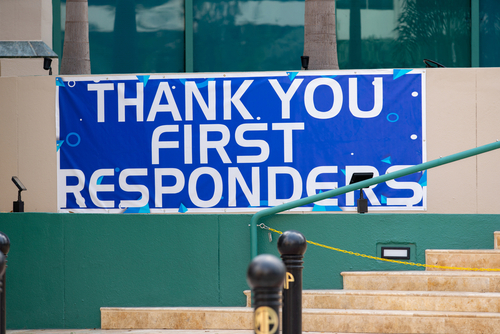
Safeguarding America’s First Responders Act of 2020 (S 3607) – This bill was introduced by Sen. Chuck Grassley (R-IA) on May 5. The bill extends death and disability benefits under the Public Safety Officers’ Benefits Program (PSOB) to public safety officers (e.g., law enforcement officers) and survivors of public safety officers who die or become injured as a result of COVID-19. The bill classifies COVID-19 or related complications suffered by a public safety officer as a personal injury sustained in the line of duty. The Act was passed in the Senate in May and in the House in July. It was signed into law on Aug. 14.
Veteran Treatment Court Coordination Act of 2019 (HR 886) – Introduced by Rep. Charlie Christ (D-FL) on Jan. 30, 2019, this legislation directs the Department of Justice to establish a Veterans Treatment Court Program to provide grants and technical assistance for state, local and tribal governments to develop and maintain veterans’ treatment courts. Treatment courts are designed to assist justice-involved vets with treatment needs such as substance abuse, mental health, and other issues unique to active service. The Act was enacted after being signed by the President on Aug. 8.
Ryan Kules and Paul Benne Specially Adaptive Housing Improvement Act of 2019 (HR 3504) – This bill is designed to amend Title 38 of the United States Code that provides for improvements to the specially adapted housing and educational assistance programs of the Department of Veterans Affairs. It is designed to help eligible disabled veterans purchase adaptive homes or upgrade existing homes to meet their specific needs for daily living activities. The bill was introduced by Rep. Gus Bilirakis (R-FL) on June 26, 2019. It was passed in the House in July 2019; in the Senate in March 2020, and was signed into law by the President on Aug. 8.
Great American Outdoors Act (HR 1957) – This Act was initially sponsored by Rep. John Lewis (D-GA) on March 28, 2019. This legislation establishes the National Parks and Public Land Legacy Restoration Fund, which is designed to support deferred maintenance projects on federal lands for fiscal years 2021 to 2025. The bill makes funding for the Land and Water Conservation Fund permanent and allocates money equal to 50 percent of energy development revenues from oil, gas, coal, or alternative or renewable energy development on federal lands and waters. The bill establishes reporting procedures for all associated projects and mandates that deposited amounts must not exceed $1.9 billion for any fiscal year. The bill was signed into law by the President on Aug. 4.
Commission on the Social Status of Black Men and Boys Act (S 2163) – Sen. Marco Rubio (R-FL) introduced this legislation on July 18, 2019. It is designed to establish a Commission on the Social Status of Black Men and Boys within the U.S. Commission on Civil Rights Office to conduct a systematic study of the conditions affecting black men and boys. The Act was passed by the Senate in June, the House in July, and was signed into law by the President on Aug. 14.
Laws to Enhance Benefits for Service Members, First Responders, Veterans and to Restore National Parks and Public Lands
September 1, 2020 · Blog, Congress at Work
⏱ 4 min read
A bill to amend the Servicemembers Civil Relief Act to extend lease protections for servicemembers under stop movement orders in response to a local, national, or global emergency, and for other purposes (S 3637) – This bill extends the Servicemembers Civil Relief Act to protect service members who were previously issued orders to change duty stations but had those orders rescinded because of the pandemic. A stop movement order may leave them with a housing and/or car lease in two different locations. This extension allows families who are unable to relocate due to pandemic-related travel restrictions to be released without penalty from their leases. It is retroactive to March 1, 2020. The bill was introduced by Sen. Jon Tester (D-MT) on May 6. It was passed by the Senate in June, the House in July, and was signed by the President on Aug. 14.
Safeguarding America’s First Responders Act of 2020 (S 3607) – This bill was introduced by Sen. Chuck Grassley (R-IA) on May 5. The bill extends death and disability benefits under the Public Safety Officers’ Benefits Program (PSOB) to public safety officers (e.g., law enforcement officers) and survivors of public safety officers who die or become injured as a result of COVID-19. The bill classifies COVID-19 or related complications suffered by a public safety officer as a personal injury sustained in the line of duty. The Act was passed in the Senate in May and in the House in July. It was signed into law on Aug. 14.
Veteran Treatment Court Coordination Act of 2019 (HR 886) – Introduced by Rep. Charlie Christ (D-FL) on Jan. 30, 2019, this legislation directs the Department of Justice to establish a Veterans Treatment Court Program to provide grants and technical assistance for state, local and tribal governments to develop and maintain veterans’ treatment courts. Treatment courts are designed to assist justice-involved vets with treatment needs such as substance abuse, mental health, and other issues unique to active service. The Act was enacted after being signed by the President on Aug. 8.
Ryan Kules and Paul Benne Specially Adaptive Housing Improvement Act of 2019 (HR 3504) – This bill is designed to amend Title 38 of the United States Code that provides for improvements to the specially adapted housing and educational assistance programs of the Department of Veterans Affairs. It is designed to help eligible disabled veterans purchase adaptive homes or upgrade existing homes to meet their specific needs for daily living activities. The bill was introduced by Rep. Gus Bilirakis (R-FL) on June 26, 2019. It was passed in the House in July 2019; in the Senate in March 2020, and was signed into law by the President on Aug. 8.
Great American Outdoors Act (HR 1957) – This Act was initially sponsored by Rep. John Lewis (D-GA) on March 28, 2019. This legislation establishes the National Parks and Public Land Legacy Restoration Fund, which is designed to support deferred maintenance projects on federal lands for fiscal years 2021 to 2025. The bill makes funding for the Land and Water Conservation Fund permanent and allocates money equal to 50 percent of energy development revenues from oil, gas, coal, or alternative or renewable energy development on federal lands and waters. The bill establishes reporting procedures for all associated projects and mandates that deposited amounts must not exceed $1.9 billion for any fiscal year. The bill was signed into law by the President on Aug. 4.
Commission on the Social Status of Black Men and Boys Act (S 2163) – Sen. Marco Rubio (R-FL) introduced this legislation on July 18, 2019. It is designed to establish a Commission on the Social Status of Black Men and Boys within the U.S. Commission on Civil Rights Office to conduct a systematic study of the conditions affecting black men and boys. The Act was passed by the Senate in June, the House in July, and was signed into law by the President on Aug. 14.
Disclaimer
These articles provide general information on tax, accounting, and financial topics for small businesses and individuals. They are educational in nature and are not specific legal, accounting, financial, tax, or other professional advice, and should not be relied upon as such. This content was prepared by Service2Client and may have been reviewed or edited by the website owner for accuracy and compliance. Look for a trust mark below for verification details. No representation is made that any approach described will achieve a particular result, and no regulatory or professional body has reviewed or endorsed this content. Because each situation is different, readers should consult a qualified professional about their specific circumstances before acting. Images accompanying these articles are protected by copyright and may not be copied or reused.
Law Enforcement Suicide Data Collection Act (S 2746) – This bill authorizes the establishment of a new Law Enforcement Officers Suicide Data Collection Program to be administered by the FBI. The program will gather data related to suicides and attempted suicides of current and former officers, as well as the wrongful detainment of U.S. nationals abroad. The purpose of the Act is to help understand and prevent law enforcement suicides. The bill was introduced by Sen. Catherine Cortez Masto (D-NV) on Oct. 30, 2019. It was passed by the House and the Senate in May and was signed into law on June 16.
Uyghur Human Rights Policy Act of 2020 (S 2744) – Sen. Marco Rubio (R-FL) introduced this legislation on May 14 as a means to condemn human rights violations of ethnic Turkic Muslims in Xinjiang. The bill calls for an end to the arbitrary detention, torture and harassment of these communities inside and outside of China. The Act was passed by both the Senate and the House in May and was signed into law by the president on June 17.
Hong Kong Autonomy Act (HR 7440) – Introduced by Rep. Brad Sherman (D-CA) on July 1, this legislation authorizes the president to sanction foreign individuals, entities and financial institutions that materially contribute to China’s failure to preserve Hong Kong’s autonomy in response to a written report to be submitted by the State Department each year. While the bill also gives the president the authority to waive or terminate sanctions, it permits Congress to override such an action by passing a joint resolution of disapproval. The Act was unanimously passed in Congress and signed into law by the president on July 14.
Emergency Aid for Returning Americans Affected by Coronavirus Act (S 4091) – This bill was introduced by Sen. Chuck Grassley (R-IA) to amend section 1113 of the Social Security Act. The Act authorizes funding for fiscal year 2020 in order to increase payments for temporary assistance to U.S. citizens and their dependents who return from foreign countries due to the COVID-19 crisis and are without available resources. The legislation enables the Department of Health and Human Services to provide monetary payments and medical care on a temporary basis. The Act was introduced and passed in both the House and Senate on June 29 and signed into law on July 13.
Protecting Nonprofits from Catastrophic Cash Flow Strain Act of 2020 (S 4209) – This bill is designed to improve emergency unemployment relief for governmental entities and nonprofit organizations by amending Title IX of the Social Security Act. The bill was introduced by Sen. Tim Scott (R-SC) on July 2. It was passed in the House and in the Senate on July 9, and is currently awaiting signature by the president.
Moving Forward Act (HR 2) – On June 11, this Act was introduced by Rep. Peter Defazio (D-OR). This bill would authorize funding for federal highways, highway safety programs and transit programs. It also addresses climate change strategies to reduce weather impacts on surface transportation by conducting a vulnerability assessment and recommending ways to enhance resilience for highways, mass transit and rail. The bill would allocate a grant program to help improve the safety, state of good repair and connectivity of transportation infrastructure in rural communities. It also directs the Department of Transportation to establish a pilot program for a national motor vehicle per-mile user fee to restore and maintain the long-term solvency of the Highway Trust Fund to uphold a state of good repair for the future. The bill passed in the House on July 1 and is currently in the Senate, where it enjoys considerable bipartisan support for infrastructure projects.
Relief and Funding for Human Rights, Emergency Aid, Cash-Flow Assistance and New Infrastructure Projects
August 1, 2020 · Blog, Congress at Work
⏱ 3 min read
Law Enforcement Suicide Data Collection Act (S 2746) – This bill authorizes the establishment of a new Law Enforcement Officers Suicide Data Collection Program to be administered by the FBI. The program will gather data related to suicides and attempted suicides of current and former officers, as well as the wrongful detainment of U.S. nationals abroad. The purpose of the Act is to help understand and prevent law enforcement suicides. The bill was introduced by Sen. Catherine Cortez Masto (D-NV) on Oct. 30, 2019. It was passed by the House and the Senate in May and was signed into law on June 16.
Uyghur Human Rights Policy Act of 2020 (S 2744) – Sen. Marco Rubio (R-FL) introduced this legislation on May 14 as a means to condemn human rights violations of ethnic Turkic Muslims in Xinjiang. The bill calls for an end to the arbitrary detention, torture and harassment of these communities inside and outside of China. The Act was passed by both the Senate and the House in May and was signed into law by the president on June 17.
Hong Kong Autonomy Act (HR 7440) – Introduced by Rep. Brad Sherman (D-CA) on July 1, this legislation authorizes the president to sanction foreign individuals, entities and financial institutions that materially contribute to China’s failure to preserve Hong Kong’s autonomy in response to a written report to be submitted by the State Department each year. While the bill also gives the president the authority to waive or terminate sanctions, it permits Congress to override such an action by passing a joint resolution of disapproval. The Act was unanimously passed in Congress and signed into law by the president on July 14.
Emergency Aid for Returning Americans Affected by Coronavirus Act (S 4091) – This bill was introduced by Sen. Chuck Grassley (R-IA) to amend section 1113 of the Social Security Act. The Act authorizes funding for fiscal year 2020 in order to increase payments for temporary assistance to U.S. citizens and their dependents who return from foreign countries due to the COVID-19 crisis and are without available resources. The legislation enables the Department of Health and Human Services to provide monetary payments and medical care on a temporary basis. The Act was introduced and passed in both the House and Senate on June 29 and signed into law on July 13.
Protecting Nonprofits from Catastrophic Cash Flow Strain Act of 2020 (S 4209) – This bill is designed to improve emergency unemployment relief for governmental entities and nonprofit organizations by amending Title IX of the Social Security Act. The bill was introduced by Sen. Tim Scott (R-SC) on July 2. It was passed in the House and in the Senate on July 9, and is currently awaiting signature by the president.
Moving Forward Act (HR 2) – On June 11, this Act was introduced by Rep. Peter Defazio (D-OR). This bill would authorize funding for federal highways, highway safety programs and transit programs. It also addresses climate change strategies to reduce weather impacts on surface transportation by conducting a vulnerability assessment and recommending ways to enhance resilience for highways, mass transit and rail. The bill would allocate a grant program to help improve the safety, state of good repair and connectivity of transportation infrastructure in rural communities. It also directs the Department of Transportation to establish a pilot program for a national motor vehicle per-mile user fee to restore and maintain the long-term solvency of the Highway Trust Fund to uphold a state of good repair for the future. The bill passed in the House on July 1 and is currently in the Senate, where it enjoys considerable bipartisan support for infrastructure projects.
Disclaimer
These articles provide general information on tax, accounting, and financial topics for small businesses and individuals. They are educational in nature and are not specific legal, accounting, financial, tax, or other professional advice, and should not be relied upon as such. This content was prepared by Service2Client and may have been reviewed or edited by the website owner for accuracy and compliance. Look for a trust mark below for verification details. No representation is made that any approach described will achieve a particular result, and no regulatory or professional body has reviewed or endorsed this content. Because each situation is different, readers should consult a qualified professional about their specific circumstances before acting. Images accompanying these articles are protected by copyright and may not be copied or reused.
Paycheck Protection Program Flexibility Act of 2020 (HR 7010) – Rep. Dean Phillips (D-MN) introduced this legislation on May 26. This Act modifies provisions related to small business loans issued under the original Paycheck Protection Program. Specifically, the bill permits forgiveness of loans used to pay expenses incurred over a 24-week period, longer than the original eight-week limit, and extends the timeframe to pay off unforgiven loans from two to five years. This bill also increases the limit on non-payroll expenses up to 40 percent when used to pay for rent, utilities, mortgage interest, and similar fixed costs. Loan recipients have until the end of 2020 to rehire employees with full access to payroll tax deferment. The bill was signed into law by the President on June 5.
Providing for Congressional Disapproval Under Chapter 8 of Title 5, United States Code, of the Rule Submitted by the Department of Education Relating to “Borrower Defense Institutional Accountability” (HJ Res 76) – This bill was introduced on Sept. 26, 2019, by Rep. Susie Lee (D-NV). In response to a September 2019 rule issued by the Department of Education (ED), this resolution sought to reverse a process that no longer allows a borrower to be discharged from a student loan if an educational institution misrepresented material facts. The new rule also requires individual borrowers to apply to ED for a defense to repayment, whereas in the past an application could be submitted on behalf of an entire group (e.g. veterans). This resolution passed in both the House and Senate but was vetoed by the President on May 29. No attempt has been made to override the veto.
USA FREEDOM Reauthorization Act of 2020 (HR 6172) – This bill would reauthorize (through November 2023) provisions related to the Foreign Intelligence and Surveillance Act (FISA). Updated provisions mandate that the FBI may not seek detailed phone records on an ongoing basis, cellular or GPS location information, or any evidence in which there is a reasonable expectation of privacy. Other mandates include certifying that the Department of Justice (DOJ) has received any information that might raise doubts about the application, and imposes additional requirements for FISA authorizations that target a U.S. person, federal elected official or candidate. The bill would increase criminal penalties for unlawful violations of FISA electronic surveillance and expands the criteria for when a FISA court decision shall be declassified. The bill was introduced by Rep. Jerrold Nadler (D-NY) on March 10. It was passed in the House in March and in the Senate, with alterations, in May. The bill was recently put on hold during its second pass in the House.
Robert Levinson Hostage Recovery and Hostage-Taking Accountability Act (S 712) – This bill addresses the wrongful detainment of U.S. nationals abroad. It authorizes the President to appoint 1.) a Special Presidential Envoy for Hostage Affairs to engage in U.S. hostage policy recovery efforts; 2.) an interagency Hostage Recovery Fusion Cell to assess and track all cases and coordinate agency efforts to safely recover hostages; 3.) a Hostage Recovery Group to develop, implement and recommend hostage recovery policies. The bill also gives the President the authority to impose visa- and property-blocking sanctions against foreign nationals responsible for or complicit in the unlawful or wrongful detention of a U.S. national abroad. The bill was introduced by Sen. Robert Menendez (D-NJ) on March 7, 2019. It was passed by the Senate on June 15 and is currently with the House.
Stop Senior Scams Act (S 149) – Sponsored by Sen. Robert Casey Jr. (D-PA), this bill establishes a Senior Scams Prevention Advisory Group to develop educational materials to help employees of retailers, financial services companies and wire transfer companies identify and prevent scams that affect seniors. It was introduced on Jan. 16, 2019, and passed in the Senate on June 10. The legislation is currently under consideration in the House.
Helping Small Business Owners, Seniors and U.S. Hostages, and Limiting Intrusive Domestic Surveillance
July 1, 2020 · Blog, Congress at Work
⏱ 4 min read
Paycheck Protection Program Flexibility Act of 2020 (HR 7010) – Rep. Dean Phillips (D-MN) introduced this legislation on May 26. This Act modifies provisions related to small business loans issued under the original Paycheck Protection Program. Specifically, the bill permits forgiveness of loans used to pay expenses incurred over a 24-week period, longer than the original eight-week limit, and extends the timeframe to pay off unforgiven loans from two to five years. This bill also increases the limit on non-payroll expenses up to 40 percent when used to pay for rent, utilities, mortgage interest, and similar fixed costs. Loan recipients have until the end of 2020 to rehire employees with full access to payroll tax deferment. The bill was signed into law by the President on June 5.
Providing for Congressional Disapproval Under Chapter 8 of Title 5, United States Code, of the Rule Submitted by the Department of Education Relating to “Borrower Defense Institutional Accountability” (HJ Res 76) – This bill was introduced on Sept. 26, 2019, by Rep. Susie Lee (D-NV). In response to a September 2019 rule issued by the Department of Education (ED), this resolution sought to reverse a process that no longer allows a borrower to be discharged from a student loan if an educational institution misrepresented material facts. The new rule also requires individual borrowers to apply to ED for a defense to repayment, whereas in the past an application could be submitted on behalf of an entire group (e.g. veterans). This resolution passed in both the House and Senate but was vetoed by the President on May 29. No attempt has been made to override the veto.
USA FREEDOM Reauthorization Act of 2020 (HR 6172) – This bill would reauthorize (through November 2023) provisions related to the Foreign Intelligence and Surveillance Act (FISA). Updated provisions mandate that the FBI may not seek detailed phone records on an ongoing basis, cellular or GPS location information, or any evidence in which there is a reasonable expectation of privacy. Other mandates include certifying that the Department of Justice (DOJ) has received any information that might raise doubts about the application, and imposes additional requirements for FISA authorizations that target a U.S. person, federal elected official or candidate. The bill would increase criminal penalties for unlawful violations of FISA electronic surveillance and expands the criteria for when a FISA court decision shall be declassified. The bill was introduced by Rep. Jerrold Nadler (D-NY) on March 10. It was passed in the House in March and in the Senate, with alterations, in May. The bill was recently put on hold during its second pass in the House.
Robert Levinson Hostage Recovery and Hostage-Taking Accountability Act (S 712) – This bill addresses the wrongful detainment of U.S. nationals abroad. It authorizes the President to appoint 1.) a Special Presidential Envoy for Hostage Affairs to engage in U.S. hostage policy recovery efforts; 2.) an interagency Hostage Recovery Fusion Cell to assess and track all cases and coordinate agency efforts to safely recover hostages; 3.) a Hostage Recovery Group to develop, implement and recommend hostage recovery policies. The bill also gives the President the authority to impose visa- and property-blocking sanctions against foreign nationals responsible for or complicit in the unlawful or wrongful detention of a U.S. national abroad. The bill was introduced by Sen. Robert Menendez (D-NJ) on March 7, 2019. It was passed by the Senate on June 15 and is currently with the House.
Stop Senior Scams Act (S 149) – Sponsored by Sen. Robert Casey Jr. (D-PA), this bill establishes a Senior Scams Prevention Advisory Group to develop educational materials to help employees of retailers, financial services companies and wire transfer companies identify and prevent scams that affect seniors. It was introduced on Jan. 16, 2019, and passed in the Senate on June 10. The legislation is currently under consideration in the House.
Disclaimer
These articles provide general information on tax, accounting, and financial topics for small businesses and individuals. They are educational in nature and are not specific legal, accounting, financial, tax, or other professional advice, and should not be relied upon as such. This content was prepared by Service2Client and may have been reviewed or edited by the website owner for accuracy and compliance. Look for a trust mark below for verification details. No representation is made that any approach described will achieve a particular result, and no regulatory or professional body has reviewed or endorsed this content. Because each situation is different, readers should consult a qualified professional about their specific circumstances before acting. Images accompanying these articles are protected by copyright and may not be copied or reused.
Paycheck Protection Program and Health Care Enhancement Act (HR 266) – This is a multilayered legislative bill divided into four distinct sections. Phase 1 authorized funding for coronavirus preparedness and response; specifically, for measures such as vaccine development and public health funding. Most of the money was allocated to the Department of Health and Human Services. Approximately 81 percent of funds were allocated domestically, with the other 19 percent allocated internationally.
Phase 2 allocated $104 billion for three specific objectives: 1) Require private health insurance plans and Medicare to cover COVID-19 testing; 2) Expand unemployment insurance by $1 billion and loosen up eligibility requirements; 3) Provide for paid sick leave at an employee’s full salary, up to $511 per day, and paid family leave at two-thirds of a worker’s usual salary.
Phase 3 provided stimulus checks to individuals and “grants” to small businesses meeting specific criteria, such as keeping employees on the payroll for two months. This phase of the bill represents by far the most expensive single spending bill ever enacted in American history, at about $2.2 trillion.
And finally, the last phase of the bill provided funding to replenish the Paycheck Protection Program (PPP) for small businesses and shore up public health measures, such as virus testing and hospital funding. The bill was signed into law by the president on April 24.
VA Tele-Hearing Modernization Act (HR 4771) – This bill amended previous guidelines to allow appellants to appear in cases before the Board of Veterans’ Appeals by picture and voice transmission from locations outside the Department of Veterans Affairs. The bill was introduced by Rep. Joe Cunningham (D-SC) on Oct. 21, 2019, and signed into law by the president on April 10.
Safeguarding America’s First Responders Act of 2020 (S 3607) – Sponsored by Sen. Chuck Grassley (R-IA), this bill was introduced on May 5 and passed in the Senate on May 14. The legislation is designed to extend death benefits to public safety officers whose deaths are caused by COVID-19, and for other purposes. The bill is currently under consideration in the House.
Law Enforcement Suicide Data Collection Act (S 2746) – Sen. Catherine Cortez Masto (D-NV) introduced this legislation on Oct. 30, 2019. The act would require the director of the FBI to provide information on suicide rates in law enforcement, and for other purposes. It was passed in the Senate on May 14 and is currently being considered by the House.
HEROES Act (HR 6800) – This bill was introduced on May 12 by Rep. Nita Lowey (D-NY). In response to the COVID-19 outbreak, this bill is designed to provide emergency supplemental appropriations for a variety of applications, including assistance to state, local, tribal and territorial governments; further, expand paid sick days, family and medical leave; unemployment compensation; nutrition and food assistance programs; housing assistance; payments to farmers; and the Paycheck Protection Program. It also outlines several potential tax credits and deductions and requires employers to develop and implement infectious disease exposure control plans. The House passed this bill on May 15; it is currently in the Senate for consideration.
In the Wake of the Coronavirus Pandemic, Congress Passes the Most Expensive Single Spending Bill in American History
June 1, 2020 · Blog, Congress at Work
⏱ 3 min read
Paycheck Protection Program and Health Care Enhancement Act (HR 266) – This is a multilayered legislative bill divided into four distinct sections. Phase 1 authorized funding for coronavirus preparedness and response; specifically, for measures such as vaccine development and public health funding. Most of the money was allocated to the Department of Health and Human Services. Approximately 81 percent of funds were allocated domestically, with the other 19 percent allocated internationally.
Phase 2 allocated $104 billion for three specific objectives: 1) Require private health insurance plans and Medicare to cover COVID-19 testing; 2) Expand unemployment insurance by $1 billion and loosen up eligibility requirements; 3) Provide for paid sick leave at an employee’s full salary, up to $511 per day, and paid family leave at two-thirds of a worker’s usual salary.
Phase 3 provided stimulus checks to individuals and “grants” to small businesses meeting specific criteria, such as keeping employees on the payroll for two months. This phase of the bill represents by far the most expensive single spending bill ever enacted in American history, at about $2.2 trillion.
And finally, the last phase of the bill provided funding to replenish the Paycheck Protection Program (PPP) for small businesses and shore up public health measures, such as virus testing and hospital funding. The bill was signed into law by the president on April 24.
VA Tele-Hearing Modernization Act (HR 4771) – This bill amended previous guidelines to allow appellants to appear in cases before the Board of Veterans’ Appeals by picture and voice transmission from locations outside the Department of Veterans Affairs. The bill was introduced by Rep. Joe Cunningham (D-SC) on Oct. 21, 2019, and signed into law by the president on April 10.
Safeguarding America’s First Responders Act of 2020 (S 3607) – Sponsored by Sen. Chuck Grassley (R-IA), this bill was introduced on May 5 and passed in the Senate on May 14. The legislation is designed to extend death benefits to public safety officers whose deaths are caused by COVID-19, and for other purposes. The bill is currently under consideration in the House.
Law Enforcement Suicide Data Collection Act (S 2746) – Sen. Catherine Cortez Masto (D-NV) introduced this legislation on Oct. 30, 2019. The act would require the director of the FBI to provide information on suicide rates in law enforcement, and for other purposes. It was passed in the Senate on May 14 and is currently being considered by the House.
HEROES Act (HR 6800) – This bill was introduced on May 12 by Rep. Nita Lowey (D-NY). In response to the COVID-19 outbreak, this bill is designed to provide emergency supplemental appropriations for a variety of applications, including assistance to state, local, tribal and territorial governments; further, expand paid sick days, family and medical leave; unemployment compensation; nutrition and food assistance programs; housing assistance; payments to farmers; and the Paycheck Protection Program. It also outlines several potential tax credits and deductions and requires employers to develop and implement infectious disease exposure control plans. The House passed this bill on May 15; it is currently in the Senate for consideration.
Disclaimer
These articles provide general information on tax, accounting, and financial topics for small businesses and individuals. They are educational in nature and are not specific legal, accounting, financial, tax, or other professional advice, and should not be relied upon as such. This content was prepared by Service2Client and may have been reviewed or edited by the website owner for accuracy and compliance. Look for a trust mark below for verification details. No representation is made that any approach described will achieve a particular result, and no regulatory or professional body has reviewed or endorsed this content. Because each situation is different, readers should consult a qualified professional about their specific circumstances before acting. Images accompanying these articles are protected by copyright and may not be copied or reused.
Supporting Veterans in STEM Careers Act (S 153) – This bill encourages veterans to participate in STEM (science, technology, engineering and mathematics) fields in a variety of ways, including making veterans eligible for certain National Science Foundation (NSF) programs. The Act directs the Office of Science and Technology Policy to establish an interagency working group to improve veteran and military spouse representation in STEM fields, and authorizes funding for the Government Accountability Office to study 1) the academic success rates of student veterans pursuing an undergraduate degree in STEM and related fields; and 2) the barriers faced by such students in pursuing such degrees. This legislation was sponsored by Sen. Marco Rubio (D-FL) on Jan. 16, 2019. It was passed in the Senate in December, the House in January, and was signed into law by the president on Feb. 11.
Protecting America’s Food and Agriculture Act of 2019 (S 2107) – This legislation directs U.S. Customs and Border Protection to hire and train more agricultural inspectors at land, air and sea ports to prevent African swine fever and other foreign animal diseases from entering the United States. The legislation was sponsored by Sen. Gary Peters (D-MI). It was introduced on July 11, 2019, passed the Senate (October) and then House (February) and is currently waiting to be signed by the president.
Payment Integrity Information Act of 2019 (S 375) – This bipartisan bill is designed to reduce federal government waste in the form of overpayments, underpayments, payments made to ineligible recipients or payments that are not properly documented. It authorizes the Office of Management and Budget (OMB) to establish pilot programs to test potential accountability mechanisms for compliance requirements, such as updating a plan to improve the integrity and usage of Social Security death data. The Act was introduced on Feb. 7, 2019, by Sen. Thomas Carper (D-DE); it passed the Senate in July, the House in February and is currently waiting to be enacted.
Presidential Transition Enhancement Act of 2019 (S 394) – This law requires eligible presidential candidates (as of September of an election year) to develop and release transition team ethics plans, including how they will address their own conflicts of interest, prior to election day. It also is designed to focus a transitioning government on ongoing issues in the public interest during the changeover so that priorities are not shifted to solely address those of special interest lobbyists. The bipartisan bill, introduced by Sen. Ron Johnson (R-WI) on Feb.7, 2019, was passed by the Senate in August and the House in February. It is awaiting signature by the president.
United States-Mexico-Canada Agreement Implementation Act (HR 5340) – Introduced by Rep. Steny Hoyer (D-MD), this legislation represents the new trade agreement between the United States, Mexico and Canada to replace the North American Free Trade Agreement. This bill passed in both the House and Senate and was signed by the president on Jan. 29. Mexico has also signed the agreement. However, Canada is still in the process of getting it ratified through Parliamentary procedures.
PIRATE Act (HR 583) – This bill dramatically increases the fine for operating a “Pirate Radio” station, in which people set up their own stations outside the official Federal Communications Commission (FCC) system. The maximum fine increases from $19,639 to $100,000 per day, with a maximum total fine capped at $2 million, up from $147,290. The legislation was introduced by Rep. Paul Tonko (D-NY) in January 2019. It passed in the House in February 2019 and in Senate in January 2020. The bill was signed into law on Jan. 24.

 Veterans’ Compensation Cost-of-Living Adjustment Act of 2020 (HR 6168) – Introduced by Rep. Elaine Luria (D-VA) on March 10, this bill increases Vet compensation benefits by 1.3 percent (the same as for Social Security recipients). The increase impacts veteran disability compensation, compensation for dependents, the clothing allowance for certain disabled veterans, and dependency and indemnity compensation for surviving spouses and children. This bill passed in the House in May and the Senate in September, and was signed into law by the president on Oct. 20.



 National Suicide Hotline Designation Act of 2020 (S 2661) – Introduced by Sen. Cory Gardner (R-CO) on Oct. 22, 2019, this bill requires the Federal Communications Commission to designate 988 as the universal telephone number for national suicide prevention and mental health crisis hotline. It also directs the Department of Health and Human Services to provide access to competent, specialized services for high-risk populations such as LGBTQ youth; minorities; and people who live in rural areas. The Act was passed in the Senate in May, the House in September, and was signed into law on Oct. 17.
 PROSWIFT Act (S 881) – This Act was sponsored by Sen. Gary Peters (D-MI) on March 26, 2019. The legislation is designed to improve understanding and forecasting of weather events in space. The bill details provisions designed to improve the ability of the United States to both forecast and mitigate the effects of space weather. The bill designates the National Science and Technology Council’s Space Weather Operations, Research, and Mitigation Working Group as the authority to direct other agency initiatives. The bill establishes a pilot program to enable the National Oceanic and Atmospheric Administration (NOAA) to enter into contracts with the commercial sector to provide space weather data, in adherence to certain standards. The bill passed in the Senate in July and in the House in September, and is currently waiting to be enacted by the President.
 A bill to amend the Servicemembers Civil Relief Act to extend lease protections for servicemembers under stop movement orders in response to a local, national, or global emergency, and for other purposes (S 3637) – This bill extends the Servicemembers Civil Relief Act to protect service members who were previously issued orders to change duty stations but had those orders rescinded because of the pandemic. A stop movement order may leave them with a housing and/or car lease in two different locations. This extension allows families who are unable to relocate due to pandemic-related travel restrictions to be released without penalty from their leases. It is retroactive to March 1, 2020. The bill was introduced by Sen. Jon Tester (D-MT) on May 6. It was passed by the Senate in June, the House in July, and was signed by the President on Aug. 14.
 Law Enforcement Suicide Data Collection Act (S 2746) – This bill authorizes the establishment of a new Law Enforcement Officers Suicide Data Collection Program to be administered by the FBI. The program will gather data related to suicides and attempted suicides of current and former officers, as well as the wrongful detainment of U.S. nationals abroad. The purpose of the Act is to help understand and prevent law enforcement suicides. The bill was introduced by Sen. Catherine Cortez Masto (D-NV) on Oct. 30, 2019. It was passed by the House and the Senate in May and was signed into law on June 16.
 Paycheck Protection Program Flexibility Act of 2020 (HR 7010) – Rep. Dean Phillips (D-MN) introduced this legislation on May 26. This Act modifies provisions related to small business loans issued under the original Paycheck Protection Program. Specifically, the bill permits forgiveness of loans used to pay expenses incurred over a 24-week period, longer than the original eight-week limit, and extends the timeframe to pay off unforgiven loans from two to five years. This bill also increases the limit on non-payroll expenses up to 40 percent when used to pay for rent, utilities, mortgage interest, and similar fixed costs. Loan recipients have until the end of 2020 to rehire employees with full access to payroll tax deferment. The bill was signed into law by the President on June 5.
 Phase 2 allocated $104 billion for three specific objectives: 1) Require private health insurance plans and Medicare to cover COVID-19 testing; 2) Expand unemployment insurance by $1 billion and loosen up eligibility requirements; 3) Provide for paid sick leave at an employee’s full salary, up to $511 per day, and paid family leave at two-thirds of a worker’s usual salary.